Gas is $4.09 a gallon nationally as of this week. In California it's pushing $5.89. Commentators are doing what they always do at moments like this: pointing at electric vehicles and saying see, now it makes sense. The math works now. The case is finally there.
They're not wrong. But they're also missing the most interesting part of the story.
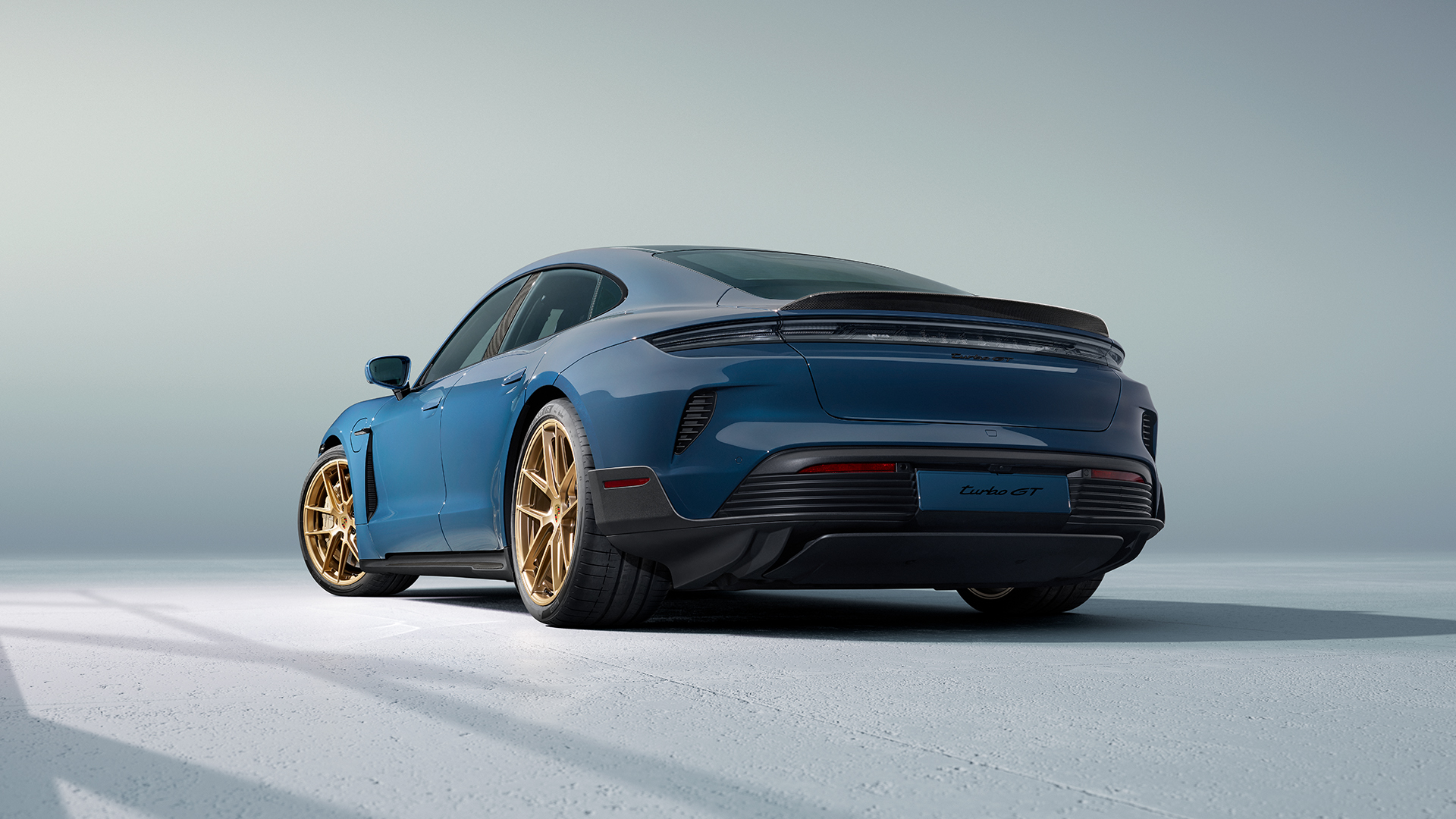
Go price a Porsche Taycan Turbo GT. It starts at $230,000. The person buying that car is not doing a fuel cost calculation. They are not saving receipts, running spreadsheets, or worrying about what's happening at the pump. At that price point, gas could hit $12 a gallon and the calculus doesn't change. And yet — Porsche went electric anyway.
That's the story. Not the gas prices. The story is what it means when the most unapologetically combustion-obsessed brand on the planet decides its future is electric, and does it not reluctantly, not as a compliance exercise, but with what can only be described as conviction.
The Theology of the Boxer Engine
The boxer engine is Porsche's soul. The flat-six in the rear of a 911 is one of the most recognizable sounds in automotive history — a mechanical argument for the primacy of the internal combustion engine. For decades, that engine wasn't just propulsion. It was identity. Buying a Porsche meant buying into a specific theology: that driving is a physical, sensory, almost spiritual act, and that the engine is the instrument through which that act becomes meaningful.
The Taycan challenges every part of that theology. It's silent. There's no shifting. The relationship between your right foot and the car's response is mediated by software, not mechanics. By every traditional measure, it should feel like a betrayal.
Instead, it feels like an argument won.
"Porsche didn't go electric despite its identity. It went electric because of it. Performance was always the point. The engine was just the best available technology at the time."
The Taycan Turbo GT hits 1,019 horsepower. It does 0-60 in 2.1 seconds. It handles with a precision that most combustion cars — including lesser Porsches — cannot touch. It didn't abandon performance. It redefined what performance means when you remove the constraints of a crankshaft, a gearbox, a cooling system, an exhaust.
The Macan Is a Different Conversation
Meanwhile, the Macan Electric exists in a different register entirely. Five variants now, from a 355-horsepower base model to a 630-horsepower Turbo, with the new 4S slotting between them. These are not performance machines in the Taycan sense. They are the cars real people actually buy — compact SUVs for urban professionals who want something that looks correct, handles correctly, and costs somewhere between a very good vacation and a very bad financial decision.
For this buyer, gas prices actually do matter — not existentially, but practically. At $5 a gallon in a state like California, the Macan Electric's operating economics start to look genuinely compelling alongside its $80,000-plus sticker. But that's still not why they're buying it.
They're buying it because it's a Porsche. Because it signals the right things to the right people. Because electric — in 2026, in a world where the Strait of Hormuz is making headlines again and $4 gas is suddenly a national news story — electric is what considered people drive. The Macan Electric buyer isn't saving the planet. They're managing perception. And Porsche, with its century of understanding exactly what their customers are actually purchasing, knows this perfectly well.
The Cayenne Closes the Case
The Cayenne Electric arrives later this year, completing a full electric transition of Porsche's core lineup. Think about what that sentence means. The 911 remains — for now — combustion. But every other volume model Porsche makes will be electric by the end of 2026. The brand that built its identity on driving feel, on the visceral connection between driver and machine, has committed its commercial future to electrons.
This is the moment that marks the end of a certain kind of argument. The argument that went: electric cars are for people who don't care about driving. That serious performance machines will always be combustion. That the soul of driving is inseparable from the sound of an engine.
Porsche killed that argument. Not Tesla, not an EV startup with venture capital and a mission statement. Porsche. The company that has spent seventy years telling us exactly what a driver's car feels like.
Gas at $4 a gallon didn't do this. The Porsche customer who bought a Taycan last year wasn't responding to fuel prices. The one who buys a Macan Electric this spring isn't running the numbers. What happened is something more fundamental: electric stopped being a compromise and became, in certain categories and at certain price points, the better object.
The better car to own. The better car to drive. The better car to be seen in.
When that happens — when the most demanding, most discerning, most performance-obsessed customers in the world start choosing electric not because they have to but because they want to — the revolution isn't coming anymore.
It arrived. Gas prices just made it easier to see.