In 1999, LVMH acquired TAG Heuer for approximately $739 million — a price that, at the time, struck several analysts as generous for a brand whose primary association was with motorsport timing and mid-range Swiss sport watches. The purchase was Bernard Arnault's first serious move into horology, and the conventional reading was that he had overpaid for a company whose most famous product, the Monaco, was better known for appearing on Steve McQueen's wrist in a 1971 film than for any recent contribution to watchmaking. The conventional reading, as it often does when applied to Arnault, missed the point entirely. He was not buying a watch company. He was buying a position in a market he intended to reshape.
Two years later, LVMH acquired Zenith. In 2008, it absorbed Hublot. In 2011, the Bulgari watch and jewelry division entered the portfolio through a $5.2 billion acquisition of the Italian house. Four brands. Four distinct identities. Four price points. Four audiences. The accumulation looked, to those who evaluate luxury conglomerates the way they evaluate watch collections, like a man who could not decide what he wanted. It was the opposite. It was a man who had decided he wanted everything — not every watch, but every version of what a watch could signify.
The Architecture of the Portfolio
The logic of LVMH's watch division becomes clear only when you understand that Arnault does not think about watches the way a collector thinks about watches. A collector asks: which is the best. Arnault asks: which customer, at which price, at which moment of their life, desires which signal. The portfolio is not a ranking. It is a map.
TAG Heuer occupies the entry point — the $2,000-to-$8,000 range where a young professional makes a first serious watch purchase. The brand's motorsport heritage, its association with speed and precision, its relatively accessible pricing within the Swiss mechanical category, makes it the front door. It is the watch a twenty-eight-year-old buys when he decides he is ready for a real watch but is not yet ready to spend what a Rolex or an Omega demands. TAG Heuer does not compete with Patek Philippe. It competes with the decision not to buy a Swiss watch at all.
Hublot occupies a different space entirely — louder, more assertive, more willing to combine materials and scales that traditional Swiss watchmaking would consider inappropriate. The Big Bang, with its 44mm case and its fusion of ceramic, titanium, and rubber, is not a watch for someone who values restraint. It is a watch for someone who has decided that visibility is the point. Hublot's customer and TAG Heuer's customer may earn similar incomes. They do not share a philosophy. LVMH owns both philosophies.
"A collector builds a watch box by choosing the best version of a single idea. Arnault built a watch division by acquiring every idea simultaneously and assigning each one a customer."
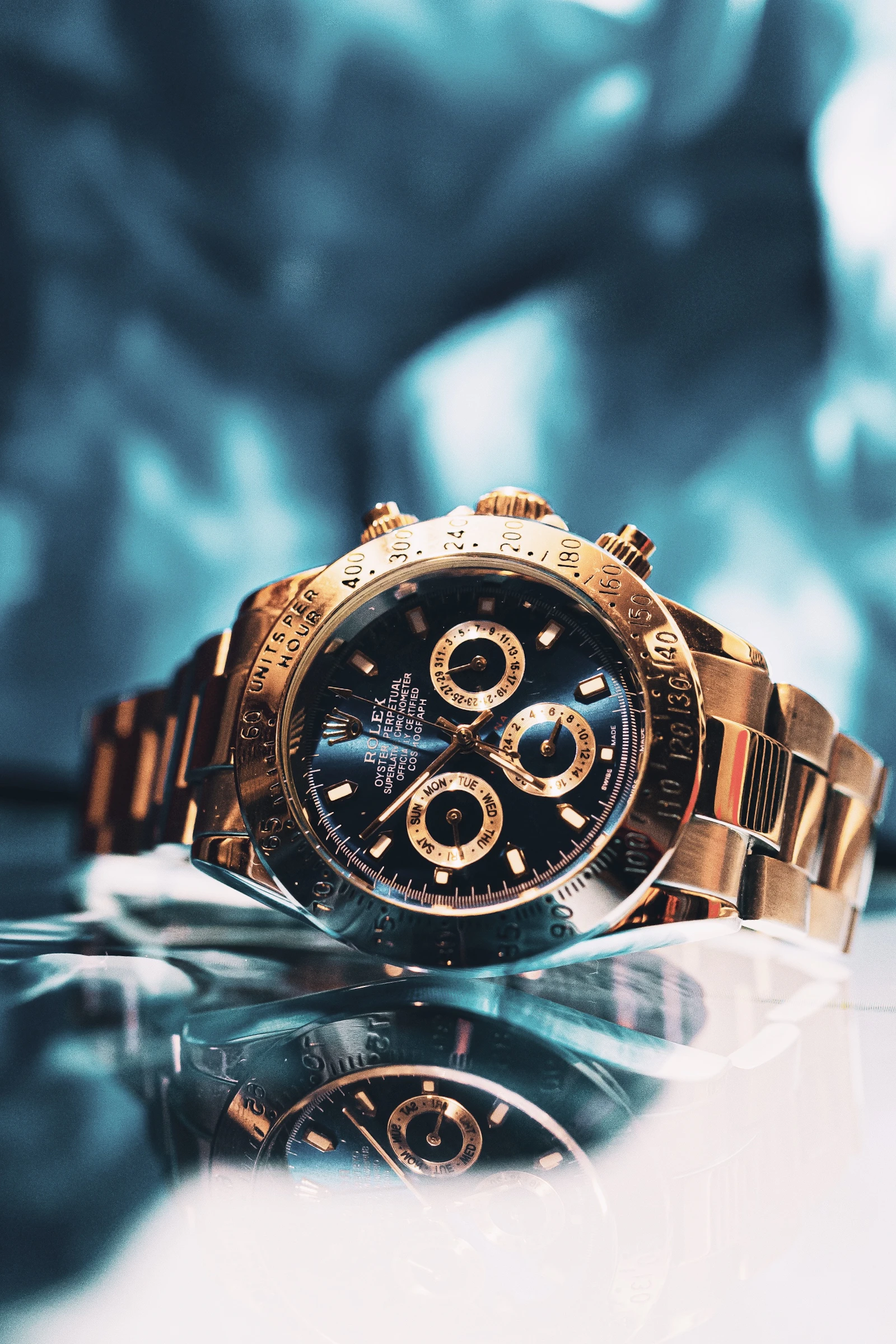
Zenith is the purist's brand — the manufacturer's manufacturer, the house that developed the El Primero movement in 1969, the first automatic chronograph caliber to beat at 36,000 vibrations per hour, a technical achievement that Rolex quietly used inside the Daytona for nearly three decades. Zenith's customer is the person who reads movement specifications before they look at the dial. The brand's commercial challenge has always been that this customer, while deeply knowledgeable, is not numerous. LVMH does not need Zenith to be numerous. It needs Zenith to be credible — to provide the portfolio with a foundation of mechanical legitimacy that TAG Heuer's volume and Hublot's spectacle cannot supply on their own.
Bulgari, the most recent addition, extends the portfolio into jewelry-watchmaking — the tradition, predominantly Italian and French, of treating a watch as an ornamental object whose beauty is the primary engineering challenge. The Serpenti, Bulgari's most recognizable watch, wraps around the wrist like a piece of sculpture. It is not competing with anything else in LVMH's horological stable. It is competing with a bracelet.
What Arnault Learned From Fashion
The strategy is borrowed from what LVMH does with fashion houses, and it is worth stating explicitly because the watch industry spent years pretending it would not apply to them. In fashion, LVMH owns Louis Vuitton and Dior and Fendi and Givenchy and Celine and Loewe — brands that, on a rack, would appear to compete with one another. They do not compete. They occupy adjacent positions in a spectrum of taste, price, and aspiration that LVMH controls end to end. A customer who outgrows Fendi does not leave the group. She arrives at Dior. A customer who finds Dior too expected discovers Loewe. The system is closed.
The watch division replicates this architecture with mechanical precision. A young man buys a TAG Heuer Carrera at twenty-eight. At thirty-five, doing well, wanting something bolder, he considers Hublot. At forty-five, his tastes have matured, and the Zenith Chronomaster speaks to a version of himself that values craft over display. His wife, meanwhile, has been wearing Bulgari since their fifth anniversary. The family's horological spending, across two decades and four brand identities, never leaves LVMH's ledger. That is the architecture. Not a collection of watch brands. A pipeline.
The Problem of Credibility
The watch industry resists conglomerate logic more stubbornly than fashion does, and the reason is mechanical. A fashion house can change creative directors, alter its silhouette, reposition its price point, and emerge within two seasons as something recognizably different. A watch movement takes years to develop, tooling costs run into the millions, and the finished product must function — visibly, measurably — as a precision instrument. The customer who buys a mechanical watch is buying, in part, a claim about engineering integrity. The presence of a luxury conglomerate's balance sheet behind that claim introduces a question that independent manufactures do not face: is the engineering serving the watch, or is the watch serving the quarterly report.
LVMH has navigated this problem more carefully than its reputation suggests. TAG Heuer's in-house movements — the Heuer 02 chronograph caliber, developed after years of reliance on external suppliers — represent a genuine investment in mechanical capability at a price point where most competitors use stock movements and hope nobody checks. Zenith's El Primero continues to be manufactured in Le Locle with a degree of vertical integration that most independent brands cannot match. Hublot's Unico movement, developed entirely in-house in Nyon, has become one of the more technically respected modern chronograph calibers, a fact that even the brand's detractors acknowledge while maintaining their aesthetic objections.
The credibility problem is not solved. It is managed. And the management is good enough that the question has shifted from whether LVMH belongs in watchmaking to whether watchmaking, as a craft tradition with a particular relationship to independence and patience, can survive the gravitational pull of a conglomerate whose fundamental skill is converting cultural capital into financial returns on a timeline that movements do not naturally observe. The El Primero beats at 36,000 vibrations per hour. The stock market refreshes rather more frequently.