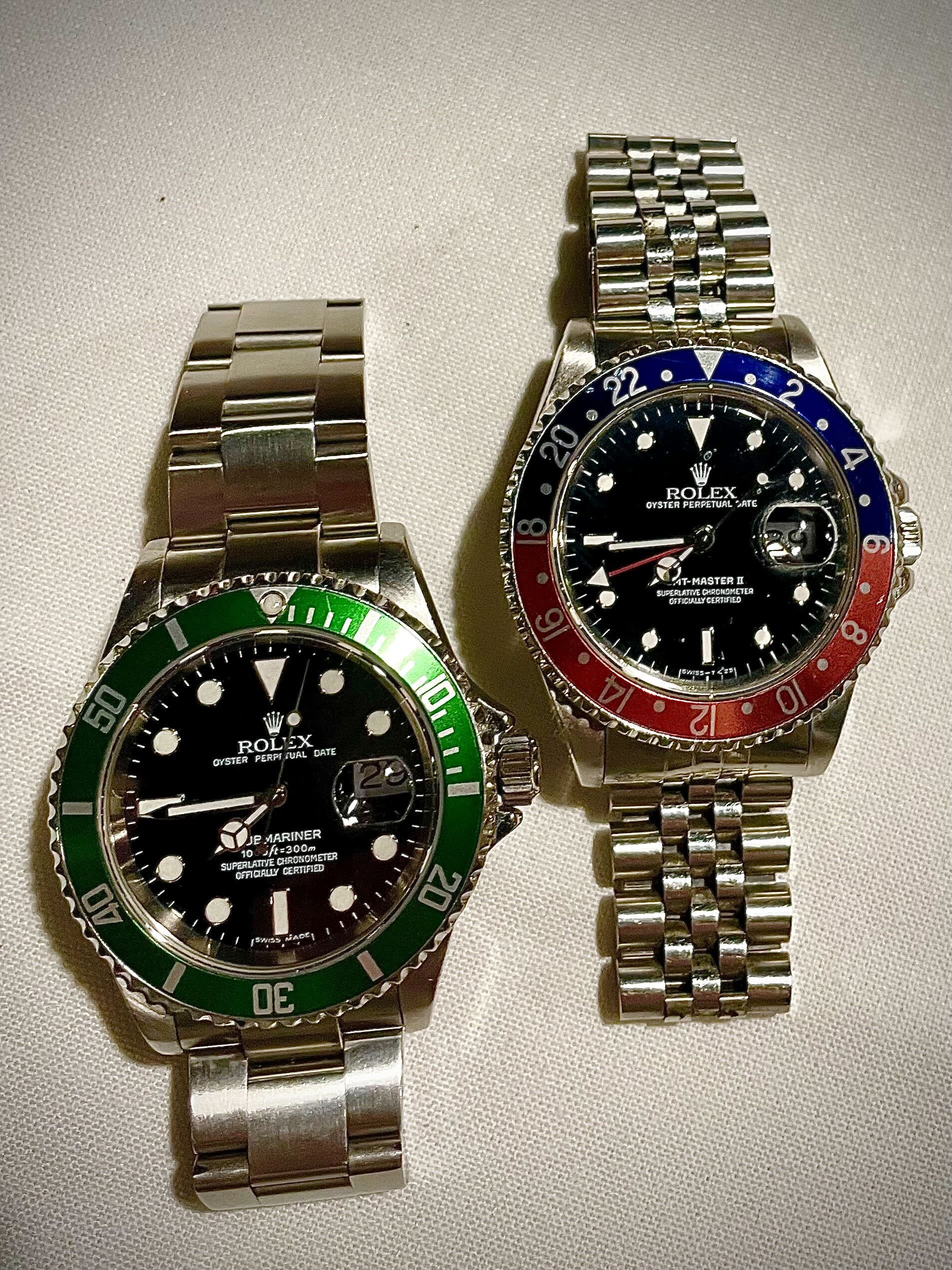
Walk into an authorized Rolex dealer today and ask for a steel Daytona. They'll take your name. They'll be polite about it. They will not give you a watch. The Daytona — the most sought-after Rolex in the catalogue, stainless steel, black dial, the one Paul Newman made famous — has a waitlist that runs between two and eight years, reserved exclusively for clients with purchasing history. You cannot buy it. You have to be selected to buy it.
This is not a supply chain problem. It is not an oversight. It is the most calculated move in the history of luxury branding: Rolex charging you nothing to tell you that you aren't ready yet.
And somehow, this only makes you want it more.
The Crown Was Always About the Story
Rolex was founded in London in 1905 by Hans Wilsdorf, a German entrepreneur who wanted to put a precision watch on the wrist — a radical idea at the time when pocket watches were still the standard. But Wilsdorf understood something that most watchmakers didn't: the technical achievement wasn't the product. The story of the technical achievement was the product.
He sponsored early adopters strategically. A Rolex on Mercedes Gleitze's wrist when she became the first woman to swim the English Channel in 1927. Rolex watches on the wrists of Everest climbers in 1953. On racing drivers. On deep-sea divers. On presidents and pilots. The watch didn't make them do it. But once they did it, the watch was there — visible, documented, associated.
Rolex didn't advertise its movement. It advertised the life you could live if you were the kind of person who wore one. This distinction — selling an identity rather than a product — is the entire architecture of the brand, and it has not changed in 120 years.
Hip-Hop Finished What Wilsdorf Started
By the 1990s, Rolex had an aristocrat problem. The brand was beloved by CEOs, old money, and country club members — all excellent customers, but not the ones who drive cultural conversation. Then something happened that Rolex did not engineer, did not pay for, and did not ask for: hip-hop adopted the crown.
Jay-Z wore one. Biggie wore one. The Daytona and the Submariner appeared in lyrics, in music videos, in photographs, on wrists that the traditional luxury industry had no language for. These were not people inherited into money. They were people who had made it — who had come from nothing and arrived somewhere that demanded documentation. And a Rolex on the wrist was the clearest possible document.
The phrase "I made it" has never had a more universally legible symbol. Not a car, not a house, not a title. A watch. Specifically: a watch on a wrist, visible in any photograph, impossible to mistake, immediately understood across every cultural context on the planet.
"The Rolex doesn't just say 'I made it.' It says 'I made it, I waited for it, and I was chosen.' That's three sentences in one object on your wrist."
Rolex didn't chase this association. It accepted it with the quiet confidence of a brand that understood its own mythology better than anyone trying to explain it. The result was a complete democratization of aspiration with no dilution of exclusivity — because the watch itself remained just as hard to get, just as expensive, just as significant.
The Waitlist Is the Product
Here is what Rolex understood before anyone else did: scarcity is not a side effect of demand. Scarcity is the product. The waiting list for a steel Submariner — currently three months to two years, down from the insane peaks of 2021 when delays stretched past three years — is not a logistics failure. It is a feature. It tells you something is happening. It makes the eventual acquisition feel earned rather than purchased.
When you finally get the call from your AD — authorized dealer, the industry shorthand — it doesn't feel like retail. It feels like selection. Like you have been vetted and approved, and now you are being admitted to something. The transaction has been deliberately reframed as an achievement.
The grey market runs parallel to all of this with its own logic. A steel Daytona trading at 130% over retail on the secondary market means that someone paid $16,000 at retail and could immediately sell it for $31,000. This is not a watch purchase. This is a financial instrument that also tells time — and also tells everyone in the room exactly who you are.
What the New Models Say
At Watches & Wonders 2025, Rolex introduced the Land-Dweller — a slim, honeycomb-dialed new model built around the Caliber 7135 movement with a 66-hour power reserve. It is technically impressive and visually restrained, aimed at the collector who wants something most people won't recognize. This is Rolex speaking to a different kind of "I made it" — the one that doesn't need to be understood immediately, because it will be.
The GMT-Master II got a Tiger Iron dial this year: red jasper, hematite, and tiger's eye layered into a stone that is literally unique on every watch, because no two pieces of the material pattern the same way. The starting price makes it irrelevant to most of the world. The stone's natural variation makes it irrelevant to the collector who wants something truly one of a kind. This is Rolex at its most deliberate — a watch designed to be incomprehensible to the uninitiated and devastating to those who know.
In 2026, the Day-Date turns 70. The model that sits at the top of the Rolex hierarchy — the "President" watch, the one given to heads of state, the one Lyndon Johnson wore when he signed civil rights legislation — will receive whatever anniversary treatment Rolex decides it deserves. The watch community is watching. The grey market is already pricing in the speculation.
There are better watches than a Rolex. Technically superior movements, more interesting complications, wilder designs. The collector who goes deep into horology eventually finds A. Lange & Söhne, Patek Philippe, independent makers in Geneva and Tokyo whose names most people will never know. This is a real conversation, and it is a good one.
But it is a different conversation. The Rolex is not trying to win on technical grounds. It is trying to mean something — and in that project, across 120 years of deliberate storytelling, strategic scarcity, and cultural adoption that no marketing budget could have bought, it has succeeded more completely than almost any object in commercial history.
The green Submariner on your wrist doesn't need a caption. Everyone in the room already read it. That's the whole point. That's always been the whole point.
You don't buy a Rolex. You earn the right — and then you wear the proof.