Somewhere on the set of Sinners — between setups, between takes, between the orchestral chaos of directing a period film on location in Louisiana — Ryan Coogler was pulling espresso shots. Not from a craft services urn. Not from a French press someone found in a rental house. From a La Marzocco Linea Mini, the kind of machine that costs more than some people's first cars, paired with a matching red Mazzer Mini grinder dialed in for Red Bay Coffee, the Oakland roaster whose beans he's been loyal to for years. He had brought the entire setup himself. He was making drinks for his crew.
This is not the behavior of someone who needs caffeine. This is the behavior of someone for whom coffee has become something else entirely — a ritual, a craft, a way of being present in a space. And Coogler, who just walked off the Academy Awards stage with his first Oscar (Best Original Screenplay, Sinners, 16 nominations), is not alone in this. Across American culture in 2026, the perfect pour has become a statement. The question is: what exactly is it saying?
From Fuel to Philosophy
Coffee has always been a functional drink before it was anything else. It woke people up. It kept the factory running, the office humming, the night shift alive. For most of the 20th century, the standard was simple: hot, caffeinated, and present. Quality was optional. The styrofoam cup was fine.
Then something shifted. The specialty coffee movement — what the industry calls the "third wave" — didn't just upgrade the product. It rewrote the entire cultural conversation around it. Coffee stopped being a commodity and became a craft. Single-origin beans from specific Ethiopian farms. Precise water temperatures. Bloom times. Extraction ratios. A pour-over done correctly takes four minutes of active attention and produces a cup that tastes nothing like what you'd get from the machine in the break room.
Specialty coffee now outpaces traditional drip in daily U.S. consumption — 46% to 42% among American adults, a near-complete inversion from fifteen years ago. But the numbers don't capture the cultural weight of what happened. Coffee didn't just get popular. It became a thing people were serious about. Serious enough to buy equipment. Serious enough to study. Serious enough to bring on set.
Two Men Who Made It Mean Something
Ryan Coogler
Director · Oscar Winner · Coffee Obsessive
The Black Panther and Sinners director brings his full espresso setup to every film set — pulling shots for cast and crew between takes. His loyalty to Red Bay, the Oakland-based roaster, is a quiet tribute to where he's from.
Jimmy Butler
NBA All-Star · BIGFACE Founder · $20 a Cup
During the 2020 NBA bubble at Disney World, Butler set up a coffee shop in his hotel room and charged $20 flat for every drink. That hustle became BIGFACE — now a flagship in Miami's Design District and a pop-up in San Francisco's Mission.
These two stories are different, but they rhyme. Coogler's coffee obsession is private and meditative — a director's way of controlling one variable in an environment of infinite variables, a ritual that grounds him while everything else is in motion. Butler's is public and entrepreneurial — a brand built on the audacity of charging $20 for a cup in a setting where nobody could leave, and the discovery that people would pay it, not because they had to, but because it was genuinely worth it.
Both men understood something that the coffee industry had been trying to articulate for years: when the craft is real, the price is a secondary conversation.
The $20 Cup That Built a Brand
The NBA bubble at Walt Disney World in 2020 was a strange social experiment — elite athletes confined to a campus, no fans, no family, nowhere to go and nothing to do but play basketball and figure out how to exist in an artificial environment. Jimmy Butler figured out how to run a coffee shop.
He ordered equipment. He ordered beans. He put a sign on his hotel room door. The price was $20 per drink, regardless of what you ordered. He called it Big Face — a reference to the $100 bill — and it was simultaneously a joke, a flex, and a genuine business proposition. The coffee was good. Players paid. Word spread through the bubble the way all good things spread in isolated communities: immediately and completely.
"When the craft is real, the price becomes a secondary conversation. Butler understood this before he had a storefront, a logo, or a name for what he was doing."
BIGFACE is now a real company with a flagship in Miami's Design District, a pop-up in San Francisco's Mission (Butler signed with the Warriors in 2025), a partnership with BACARDÍ Rum that produced the Rum Room Domino Club experience, and an appearance at the South Beach Wine & Food Festival in 2026. The hotel room hustle became a brand because the product behind the audacity was actually excellent. That sequence — lead with confidence, back it up with craft — is not a coffee story. It's an American story.
Chasing the Perfect Pour
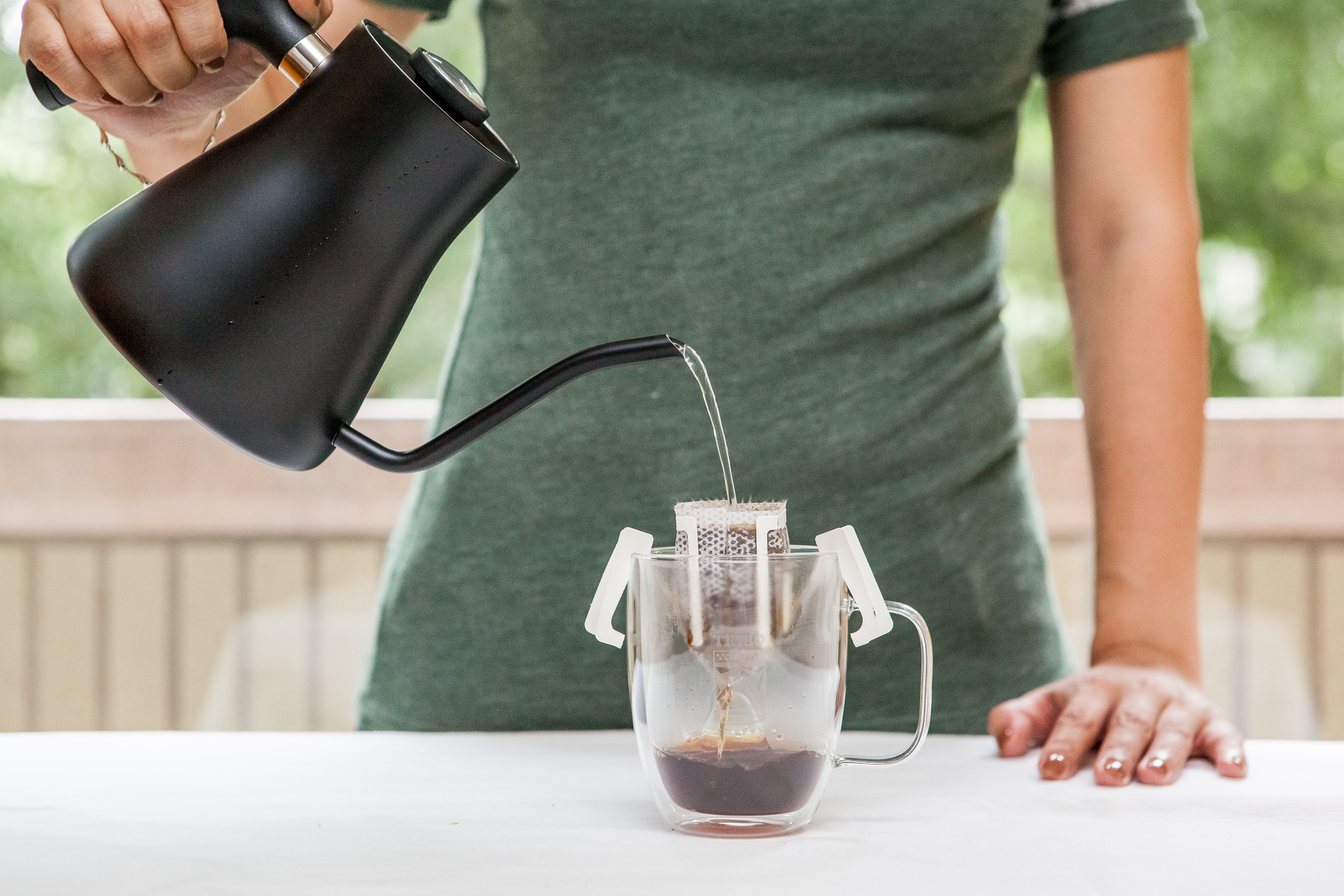
The pour-over has become the defining ritual of the third-wave movement, and it's worth sitting with why. It is slow. It requires attention. You heat water to a specific temperature (93–96°C for most single-origins), bloom the grounds for thirty seconds, then pour in a controlled spiral pattern over the next three minutes. There is no shortcut that produces the same result. The ritual is the point.
In a culture built on speed and convenience — where you can have almost anything in forty-five minutes and coffee from a pod machine in ninety seconds — choosing to spend four minutes making a single cup of coffee is a countercultural act. It's a refusal. It says: this matters enough to do slowly. That's a statement about values, not just about taste.
Which is exactly why it resonates with people like Coogler, who makes films that demand four years of attention, and Butler, who became a great basketball player through daily, relentless practice of fundamentals. The pour-over is the same logic applied to caffeine. Mastery takes time. The result is worth it.
Specialty coffee now accounts for the majority of what Americans drink in a day. The third wave didn't stay niche — it went mainstream, the same way craft beer did, the same way sneaker culture did, the same way vinyl records came back. The thing that started as an obsession for a small community of dedicated practitioners became, slowly and then all at once, the way everyone talks about coffee.
What Ryan Coogler does on a film set with a La Marzocco and a bag of Red Bay is the same thing Jimmy Butler did in a hotel room with a sign on the door. It's the same thing your neighborhood coffee bar does when it sources a washed Ethiopian natural and writes the farmer's name on the menu board. It's the declaration that something small and daily and easily overlooked is worthy of real attention, real craft, and real care.
The cup is the culture. It always was. We're just finally paying attention.
