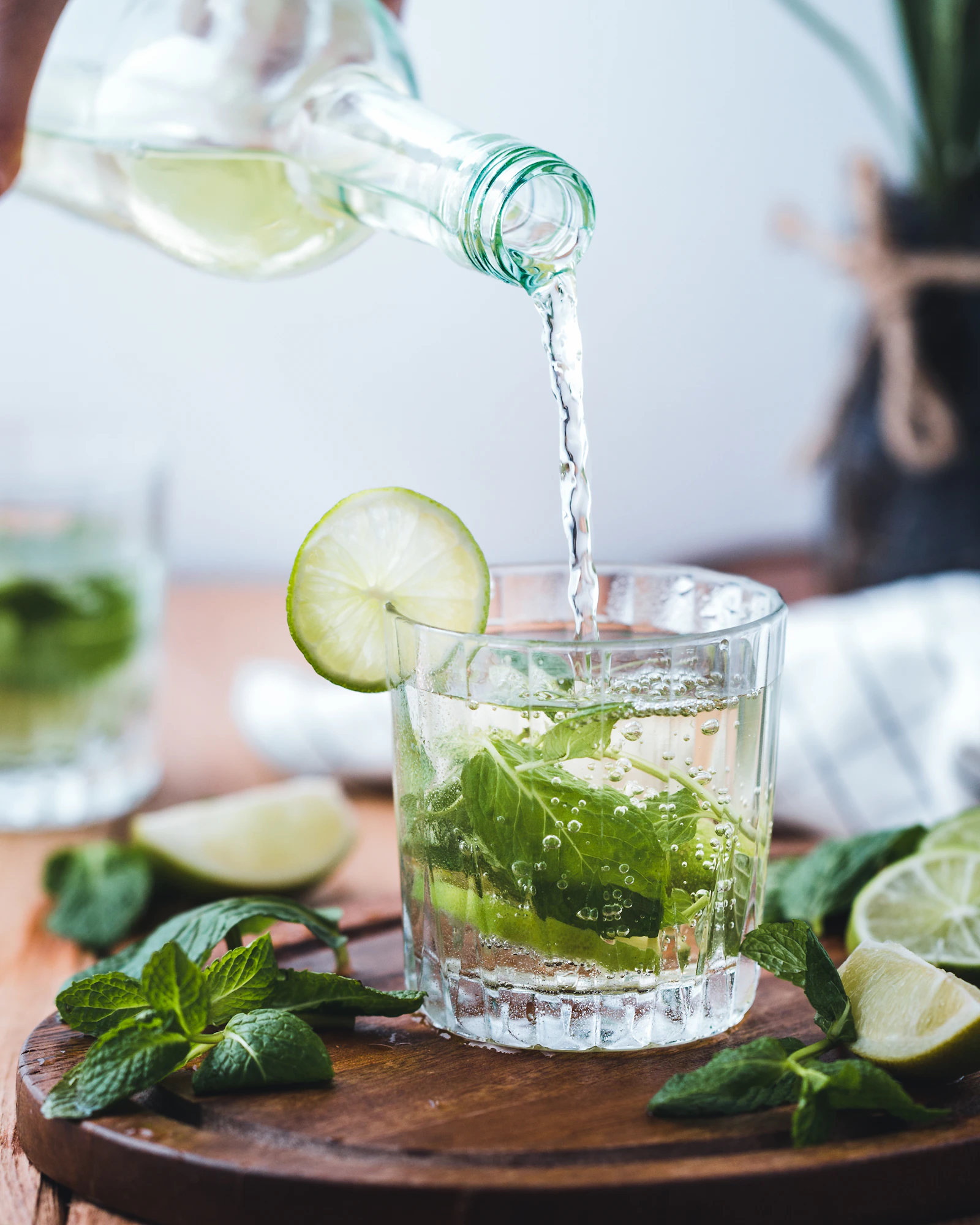
The first non-alcoholic spirit I tried was a bottle of Seedlip Spice 94, purchased in 2019 at a bar in San Francisco where the bartender described it as "complex and aromatic." It cost $14 for a single serve. It tasted like someone had steeped cardamom in sadness and charged a premium for the ambiance. I poured most of it into a potted plant on the way out.
This is not a story about Seedlip specifically. It is a story about the gap — for most of the market's history, a very wide gap — between what the non-alcoholic drinks category promised and what it delivered. The sober-curious movement had a genuine cultural logic: demographic research consistently found that people under 35 were drinking less, that there was real demand for complex, considered drinking experiences that didn't involve alcohol, that the category had room. The demand was real. The supply was, for a long time, not.
That has changed. Not uniformly, not everywhere, but in ways that matter and in places you might not expect.
Why the Early Products Failed
Non-alcoholic beer has existed for decades. Non-alcoholic wine has existed for decades. Both categories spent most of their existence being what they were trying not to be: obvious substitutes that reminded the drinker of the thing they were substituting. The chemistry of de-alcoholization — removing ethanol from fermented beverages — tends to strip heat, body, and the particular mouthfeel that ethanol provides, leaving something thinner and more one-dimensional than the original.
The early non-alcoholic spirits tried to solve this differently, by building complexity through botanicals rather than by starting with something alcoholic and removing the alcohol. The results were inconsistent. Some of them were genuinely interesting — Lyre's, the Australian producer, makes a non-alcoholic whiskey that actually holds up in a cold glass — but many were sweet in ways that felt compensatory, herbal in ways that felt medicinal, and priced at a level that required the category to be better than it was.
The fundamental problem was framing. Early producers positioned their drinks as substitutes for alcoholic drinks, which set an expectation they couldn't meet. A non-alcoholic gin and tonic is not a gin and tonic. It is a different drink. When it's good, it is a different drink with its own pleasure. When it's bad, it is a reminder that the gin is not there.
"The producers who got it right stopped trying to replace alcohol and started asking a different question: what does this drink do well that nothing else does?"
Japan, and the Category That Was Always There
Kirin Brewery introduced a line of non-alcoholic beer in Japan in 1991. This was not a trend response. Japan has strict drunk-driving laws, a culture of after-work dining that includes drivers, and a population accustomed to precision and quality in food and beverage. The non-alcoholic beer category in Japan developed under pressure from all three of these conditions simultaneously.
The result, three decades later, is a selection of non-alcoholic beers that solve most of what Western producers are still struggling with. Kirin Greeeen Label. Suntory ALL-FREE. Asahi Dry Zero. These are not beer-flavored beverages with a note of apology. They are finished, considered products that happen not to contain alcohol, made by breweries that have been refining the category for thirty years.
Japanese producers also led early development of what they call tei-arukōru — low-alcohol beverages — understanding that the category is not binary between alcoholic and non-alcoholic but exists on a spectrum. Chuhai at 3 percent. Beer at 0.5 percent. Sparkling tea. A category of fermented beverages that sit at the edge of perceivable alcohol content, where the flavor benefits of fermentation are present but the intoxicating effects are minimal. Western brands are beginning to explore this space now. Japanese brands have been there for a generation.
What Good Looks Like in 2026
Acid League, a Canadian producer, makes a line of non-alcoholic wines that ferment grape juice with specific cultures to develop complexity before the alcoholic stage is ever reached. The result reads in the glass as something close to wine — not because it's trying to trick you, but because some of the same chemical processes that make wine interesting have been allowed to occur. The texture is there. The acidity is there. The thing that interests you is there.
Monday Gin, based in the US, uses a distillation process with juniper, cucumber, and rosemary that produces something genuinely botanical rather than sweet-herbal. It works in a negroni template — non-alcoholic vermouth, non-alcoholic bitters, a large cube of ice — in a way that earlier non-alcoholic spirits couldn't. The drink is not a substitute for a negroni. It is a negroni-adjacent experience that has its own merit.
Ghia, founded in 2020, positioned itself as an apéritif rather than as a substitute for anything. The bottle is beautiful. The drink is bitter, complex, and designed to be consumed with food in the early evening — the same context as Campari or Aperol, but approached on its own terms rather than as a replacement. This framing decision turned out to matter enormously. Ghia has grown to be one of the top-performing non-alcoholic brands in the US precisely because it asked people to try a new thing rather than accept a lesser version of an old thing.
The $11 billion market figure is real, and it is real because there is genuine demand for what the best producers are now actually making. Not because people want to pretend they're drinking alcohol. Because there is a specific pleasure available in a bitter, cold, complex, carefully made drink that has nothing to do with intoxication and everything to do with the ritual of drinking — the glass, the ice, the hour, the company — being honored on its own terms.
I went back to the same San Francisco bar last year. They have a different non-alcoholic program now. The bartender put a small glass of something amber and bitter in front of me without asking. Gentian root. Yuzu peel. A fermented base that had been working for three months before anyone bottled it.
I finished every drop. The potted plant got water.